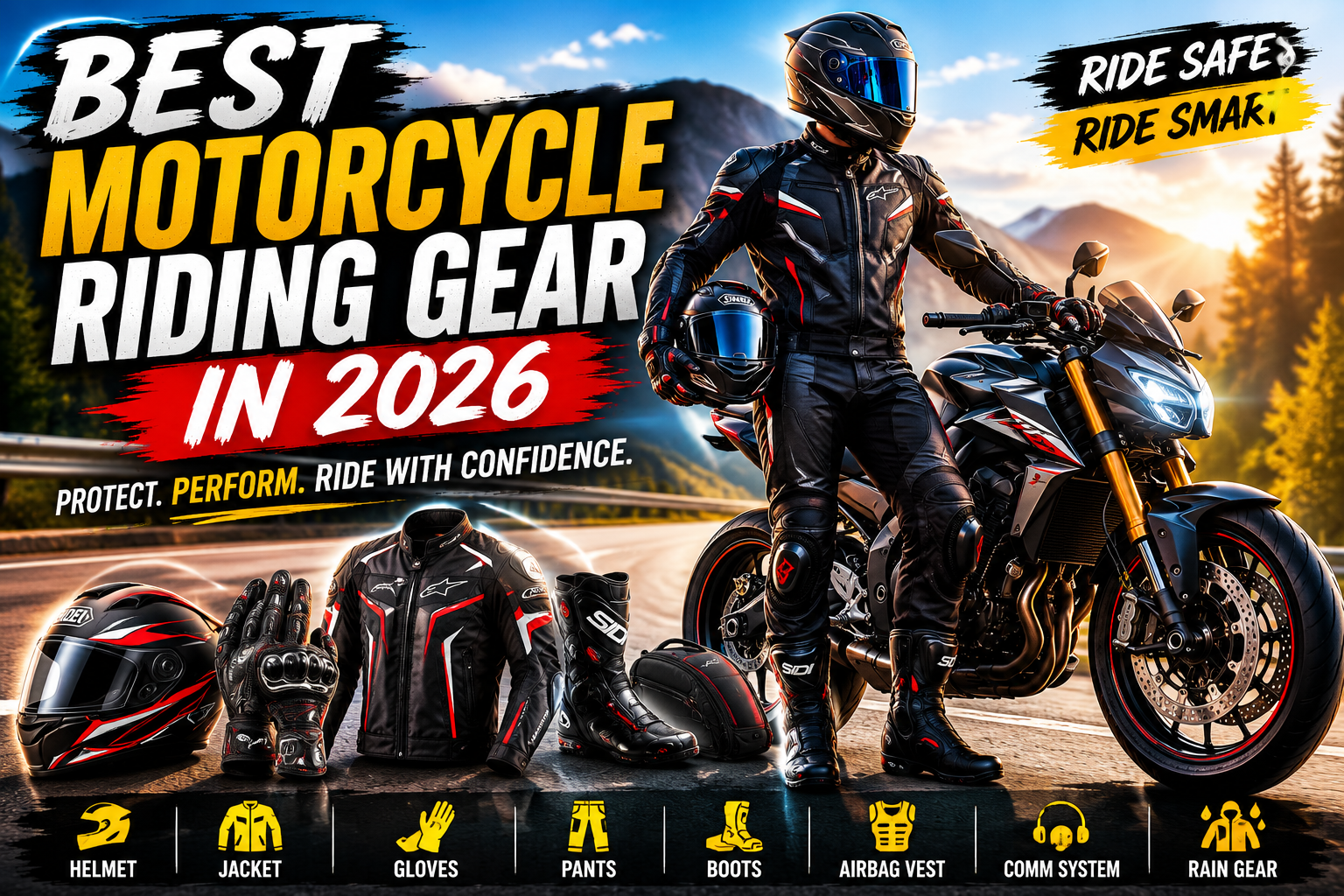
Motorcyclist wearing a modern helmet, armored jacket, gloves, boots, and riding pants while riding on an open highway.
I still remember my first motorcycle ride.
Like many beginners, I spent most of my budget on the bike itself and very little on riding gear. A basic helmet felt like enough protection. After all, I wasn’t planning to crash.
Then one day I hit a patch of gravel while taking a corner.
Fortunately, I stayed upright, but the experience changed the way I looked at motorcycle safety.
That’s when I realized something every experienced rider already knows:
The best motorcycle riding gear isn’t about looking cool.
It’s about protecting your body when things don’t go as planned.
In 2026, motorcycle gear is smarter, lighter, safer, and more comfortable than ever before. From advanced helmets with communication systems to airbag jackets and weatherproof riding suits, modern gear can dramatically improve both safety and comfort.
Whether you’re a beginner rider, daily commuter, touring enthusiast, or weekend adventurer, investing in quality riding gear is one of the smartest decisions you can make.
Table of Contents
- Quick Answer: What Is Motorcycle Riding Gear?
- Key Motorcycle Gear Facts
- Why Riding Gear Matters
- Motorcycle Helmet
- Riding Jacket
- Riding Gloves
- Riding Pants
- Motorcycle Boots
- Airbag Vests and Jackets
- Rain Gear
- Base Layers
- Communication Systems
- High-Visibility Gear
- Adventure Riding Gear
- Touring Gear
- Common Mistakes Riders Make
- How to Choose the Right Gear
- FAQs
- Final Thoughts
Quick Answer: What Is Motorcycle Riding Gear?
Motorcycle riding gear refers to specialized protective clothing and equipment designed to improve rider safety, comfort, and visibility. Essential riding gear includes a helmet, jacket, gloves, pants, and boots, while advanced protection may include airbag systems, armor inserts, and weather-resistant equipment.
Key Motorcycle Riding Gear Facts
| Gear Item | Main Purpose |
|---|---|
| Helmet | Head protection |
| Jacket | Upper body protection |
| Gloves | Hand protection |
| Pants | Leg protection |
| Boots | Foot and ankle protection |
| Airbag Vest | Impact protection |
| Rain Gear | Weather protection |
| Base Layers | Comfort and temperature control |
| Communication System | Rider communication |
| High-Visibility Gear | Improved visibility |
1. Why Riding Gear Matters
Motorcycles offer freedom that cars simply cannot match.
However, motorcycles also expose riders directly to:
- Weather
- Road debris
- Wind
- Insects
- Falls
- Accidents
Unlike car drivers, motorcyclists don’t have airbags, seatbelts, or a steel frame around them.
Your riding gear becomes your first line of defense.
Quality gear can:
- Reduce injuries
- Improve comfort
- Increase visibility
- Protect against weather
- Reduce rider fatigue
2. Motorcycle Helmets
The helmet remains the most important piece of motorcycle gear.
Modern 2026 helmets offer:
✓ Enhanced impact protection
✓ Better ventilation
✓ Integrated communication systems
✓ Noise reduction technology
✓ Improved aerodynamics
Types of Motorcycle Helmets
Full-Face Helmets
Provide maximum protection.
Best for:
- Sport riders
- Commuters
- Touring riders
Modular Helmets
Allow the front section to flip upward.
Best for:
- Touring
- Adventure riding
Open-Face Helmets
Provide less protection but better airflow.
Best for:
- Urban riding
3. Riding Jackets
A motorcycle jacket is far more than a fashion item.
Modern jackets feature:
✓ CE-rated armor
✓ Abrasion-resistant materials
✓ Waterproof membranes
✓ Ventilation systems
✓ Reflective panels
Popular Materials
- Leather
- Textile
- Mesh
- Hybrid combinations
Textile jackets continue gaining popularity because they provide versatility in different weather conditions.
4. Riding Gloves
Many riders underestimate the importance of gloves.
In a fall, hands naturally reach toward the ground.
Good gloves provide:
✓ Abrasion resistance
✓ Knuckle protection
✓ Better grip
✓ Weather protection
✓ Reduced vibration
Modern gloves often include touchscreen compatibility.
5. Riding Pants
Regular jeans are not designed for motorcycle crashes.
Motorcycle pants offer:
✓ Abrasion-resistant fabrics
✓ Knee armor
✓ Hip protection
✓ Weather resistance
✓ Better comfort on long rides
Many 2026 riding jeans now look casual while providing substantial protection.
6. Motorcycle Boots
Feet and ankles are vulnerable during accidents.
Motorcycle boots help protect:
- Ankles
- Toes
- Heels
- Lower legs
Features to look for:
✓ Reinforced toe box
✓ Ankle armor
✓ Oil-resistant sole
✓ Waterproof construction
✓ Strong grip
7. Airbag Vests and Jackets
One of the biggest advancements in 2026 motorcycle safety is airbag technology.
Airbag systems can protect:
- Chest
- Neck
- Back
- Shoulders
- Ribs
When sensors detect a crash, the airbag deploys within milliseconds.
Airbag gear is becoming increasingly popular among touring and sport riders.
8. Rain Gear
Weather can change quickly during a ride.
Good rain gear includes:
✓ Waterproof jacket
✓ Waterproof pants
✓ Waterproof gloves
✓ Boot covers
✓ Reflective elements
Staying dry helps maintain concentration and comfort.
9. Base Layers
Base layers improve riding comfort significantly.
Benefits include:
- Moisture control
- Temperature regulation
- Reduced fatigue
- Improved comfort
They are especially useful during long-distance rides.
10. Communication Systems
Helmet communication systems have improved dramatically.
Modern systems allow:
✓ Rider-to-rider communication
✓ GPS navigation
✓ Phone calls
✓ Music streaming
✓ Voice commands
Many riders now consider communication systems essential touring equipment.
11. High-Visibility Gear
Being seen is often just as important as being protected.
High-visibility gear includes:
- Reflective jackets
- Reflective vests
- Bright helmets
- LED safety accessories
Visibility becomes especially important during:
- Night riding
- Rain
- Fog
- Heavy traffic
12. Adventure Riding Gear
Adventure riders face unique challenges.
Adventure gear typically provides:
✓ Waterproof protection
✓ Impact armor
✓ Ventilation
✓ Storage pockets
✓ Durability
Adventure equipment is designed to handle both pavement and off-road conditions.
13. Touring Gear
Long-distance touring requires specialized comfort.
Touring gear often focuses on:
- Weather resistance
- Ventilation
- Long-term comfort
- Storage options
- Layering systems
Comfort becomes increasingly important on rides lasting several hours.
14. Common Mistakes Riders Make
Mistake 1: Buying Cheap Helmets
Your helmet protects your brain.
Quality should always come first.
Mistake 2: Riding in Regular Clothing
Street clothes offer limited protection.
Mistake 3: Ignoring Weather Conditions
The wrong gear can make rides uncomfortable and unsafe.
Mistake 4: Choosing Style Over Protection
Appearance should never be the primary factor.
Mistake 5: Skipping Gloves
Hand injuries are common during falls.
15. How to Choose the Right Riding Gear
Ask yourself:
- What type of riding do I do?
- What weather conditions do I face?
- How often do I ride?
- What’s my budget?
- Do I prioritize comfort or maximum protection?
The best gear balances:
- Safety
- Comfort
- Durability
- Fit
- Budget
FAQs
What is the most important motorcycle riding gear?
A certified full-face helmet is generally considered the most important.
Do I really need motorcycle boots?
Yes. Boots provide ankle and foot protection that regular shoes cannot.
Is leather better than textile?
Both have advantages. Leather offers excellent abrasion resistance, while textiles provide versatility and weather protection.
Are airbag jackets worth it?
Many riders consider them one of the most significant safety advancements in motorcycle gear.
How often should helmets be replaced?
Most manufacturers recommend replacement every 5 years or after any significant impact.
Can I wear jeans while riding?
Regular jeans provide limited protection. Riding jeans are a safer option.
Why are motorcycle gloves important?
They protect your hands from impacts, abrasions, and weather.
What gear should beginners buy first?
Helmet, jacket, gloves, boots, and riding pants.
Is expensive gear always better?
Not always, but quality gear typically offers better materials, protection, and durability.
What riding gear is best for hot weather?
Mesh jackets, ventilated gloves, lightweight helmets, and moisture-wicking base layers.
Final Thoughts
Motorcycles are built for freedom, adventure, and excitement.
But every ride carries some level of risk.
The right riding gear won’t eliminate that risk, but it can significantly reduce injuries and improve comfort in almost every riding situation.
In 2026, riders have access to safer and more advanced equipment than ever before.
Whether you’re commuting to work, exploring backroads, or planning a cross-country tour, quality riding gear is one investment you’ll never regret.
Because when it comes to motorcycle safety, the best gear is the gear you’re wearing when you need it most.