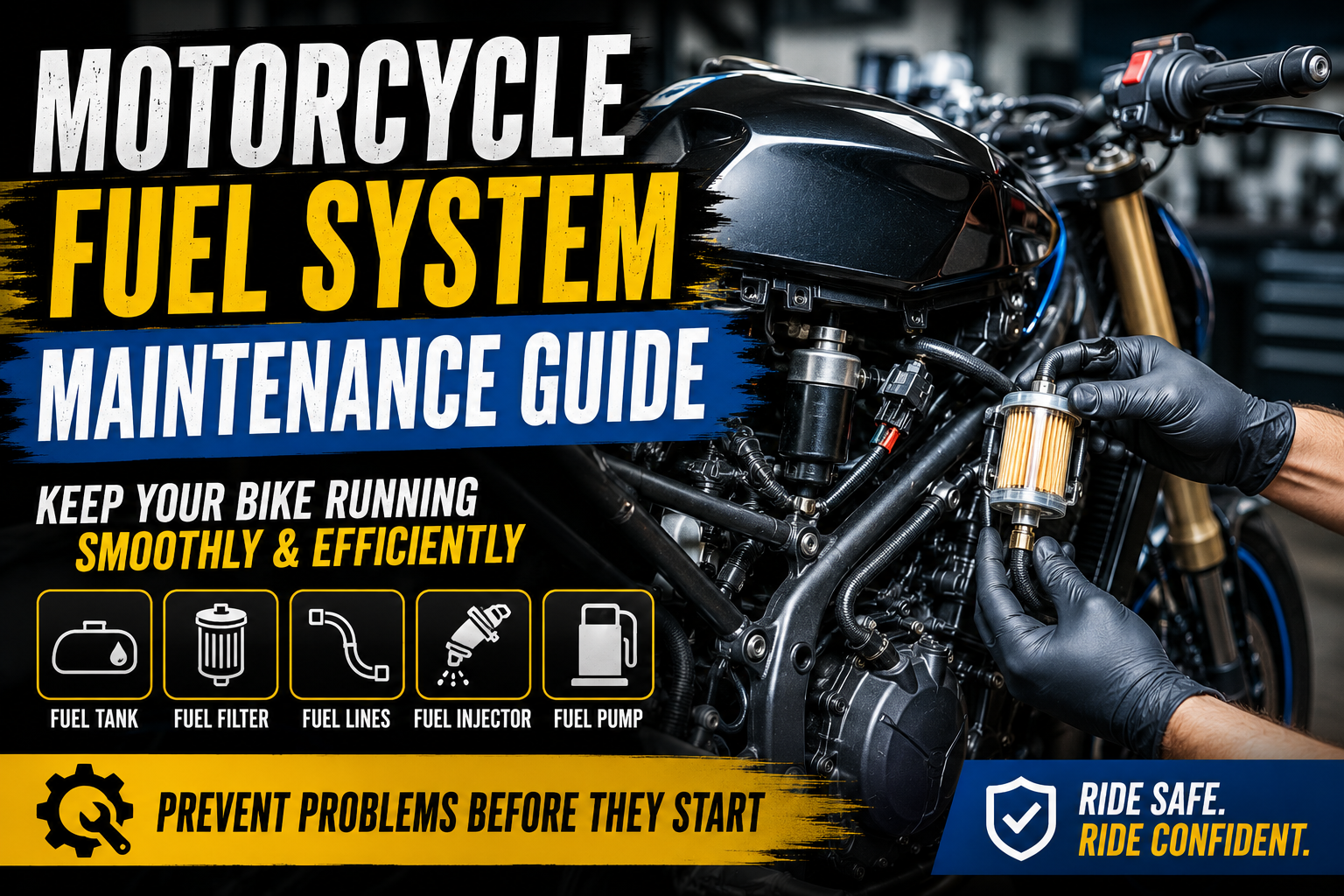
Motorcyclist inspecting a motorcycle fuel tank, fuel lines, and fuel injector system inside a professional garage.
I once spent nearly an hour trying to start my motorcycle after it had been sitting unused for a few months.
The battery was fine.
The spark plugs looked good.
The engine turned over normally.
Yet the bike simply refused to start.
After some troubleshooting, I discovered the real culprit: old fuel had clogged part of the fuel system.
That experience taught me an important lesson.
A motorcycle’s fuel system is like its circulatory system. Without clean fuel flowing properly, even the best engine won’t perform as it should.
The good news is that regular fuel system maintenance can prevent many common problems before they become expensive repairs.
Whether you ride daily, occasionally, or store your motorcycle during the winter, understanding fuel system maintenance is essential for keeping your bike reliable and efficient.
Table of Contents
- Quick Answer: What Is Motorcycle Fuel System Maintenance?
- Key Fuel System Facts
- Why Fuel System Maintenance Matters
- Understanding the Motorcycle Fuel System
- Fuel Tank Maintenance
- Fuel Quality and Fuel Selection
- Fuel Injector Maintenance
- Carburetor Maintenance
- Fuel Filter Inspection
- Fuel Line Inspection
- Preventing Fuel Contamination
- Fuel Stabilizers and Storage
- Signs of Fuel System Problems
- Common Fuel System Mistakes
- Fuel System Maintenance Checklist
- FAQs
- Final Thoughts
Quick Answer: What Is Motorcycle Fuel System Maintenance?
Motorcycle fuel system maintenance involves inspecting, cleaning, and maintaining components such as the fuel tank, fuel lines, fuel filter, injectors, or carburetor to ensure proper fuel delivery and engine performance.
Key Fuel System Facts
| Component | Purpose |
|---|---|
| Fuel Tank | Stores fuel |
| Fuel Pump | Delivers fuel to engine |
| Fuel Filter | Removes contaminants |
| Fuel Lines | Transport fuel |
| Fuel Injectors | Spray fuel into engine |
| Carburetor | Mixes fuel and air |
| Fuel Cap | Prevents contamination |
| Fuel Stabilizer | Protects stored fuel |
1. Why Fuel System Maintenance Matters
Many motorcycle performance issues originate from the fuel system.
Neglecting maintenance can cause:
- Hard starting
- Poor fuel economy
- Rough idling
- Power loss
- Engine hesitation
- Expensive repairs
Regular maintenance helps keep fuel flowing efficiently and prevents buildup of contaminants.
2. Understanding the Motorcycle Fuel System
Modern motorcycles typically use either:
Fuel Injection Systems
Most modern motorcycles use electronic fuel injection (EFI).
Benefits include:
✓ Better fuel economy
✓ Improved throttle response
✓ Easier starting
✓ Reduced emissions
Carbureted Systems
Older motorcycles often use carburetors.
Benefits include:
✓ Simpler design
✓ Easier mechanical adjustments
✓ Lower repair costs
Both systems require regular maintenance.
3. Fuel Tank Maintenance
The fuel tank is the starting point of the fuel system.
Inspect regularly for:
✓ Rust
✓ Water contamination
✓ Dirt buildup
✓ Fuel leaks
✓ Damaged fuel cap seals
A clean fuel tank helps protect every downstream component.
4. Fuel Quality and Fuel Selection
Fuel quality directly affects engine performance.
Use:
- Fresh fuel
- Recommended octane rating
- Reputable fuel stations
Avoid:
- Old fuel
- Contaminated fuel
- Incorrect octane levels
Poor-quality fuel can lead to deposits and reduced performance.
5. Fuel Injector Maintenance
Fuel injectors deliver precise amounts of fuel to the engine.
Dirty injectors may cause:
- Rough idle
- Poor acceleration
- Reduced fuel economy
- Hard starting
Maintenance tips:
✓ Use quality fuel
✓ Add injector cleaner periodically
✓ Follow service intervals
✓ Replace damaged injectors when necessary
6. Carburetor Maintenance
Carburetors require periodic cleaning and adjustment.
Check for:
✓ Dirt buildup
✓ Blocked jets
✓ Fuel leaks
✓ Improper tuning
✓ Sticky floats
Regular cleaning can significantly improve performance.
7. Fuel Filter Inspection
The fuel filter protects the engine from contaminants.
Inspect for:
✓ Blockages
✓ Restricted fuel flow
✓ Dirt accumulation
✓ Age-related wear
Replace filters according to manufacturer recommendations.
8. Fuel Line Inspection
Fuel lines transport fuel throughout the system.
Inspect regularly for:
✓ Cracks
✓ Leaks
✓ Hardening
✓ Kinks
✓ Loose connections
Even small leaks can become serious safety hazards.
9. Preventing Fuel Contamination
Contaminated fuel is one of the most common fuel system problems.
Contaminants may include:
- Water
- Rust
- Dirt
- Debris
- Old fuel deposits
Prevention tips:
✓ Keep fuel tank sealed
✓ Use clean fuel
✓ Replace filters regularly
✓ Store fuel properly
10. Fuel Stabilizers and Storage
Motorcycles often sit unused for weeks or months.
Fuel stabilizers help:
✓ Prevent fuel degradation
✓ Reduce varnish buildup
✓ Protect injectors
✓ Improve starting after storage
Fuel stabilizer is especially useful for seasonal riders.
11. Signs of Fuel System Problems
Watch for these warning signs:
Hard Starting
May indicate injector, carburetor, or fuel pump issues.
Poor Fuel Economy
Often caused by fuel delivery problems.
Engine Hesitation
May indicate clogged injectors or fuel restrictions.
Rough Idling
Can result from fuel contamination.
Reduced Power
Often linked to insufficient fuel flow.
12. Common Fuel System Mistakes
Mistake 1: Letting Fuel Sit Too Long
Old fuel can degrade and form deposits.
Mistake 2: Ignoring Fuel Filters
A clogged filter restricts fuel flow.
Mistake 3: Using Poor-Quality Fuel
Low-quality fuel may contain contaminants.
Mistake 4: Neglecting Storage Preparation
Proper storage protects the entire fuel system.
Mistake 5: Waiting Until Problems Appear
Preventive maintenance is far cheaper than repairs.
13. Motorcycle Fuel System Maintenance Checklist
Before Riding:
✓ Check for leaks
✓ Inspect fuel level
✓ Ensure fuel cap is secure
Monthly:
✓ Inspect fuel lines
✓ Check fuel filter condition
✓ Look for corrosion
Seasonally:
✓ Clean fuel system
✓ Add fuel stabilizer if storing
✓ Inspect tank interior
✓ Service injectors or carburetor if necessary
FAQs
How often should I inspect my motorcycle fuel system?
A quick visual inspection should be performed regularly, especially before long rides.
Can old fuel damage my motorcycle?
Yes. Old fuel can create deposits and clog fuel system components.
What are signs of dirty fuel injectors?
Poor acceleration, rough idle, reduced fuel economy, and hard starting.
How often should fuel filters be replaced?
Follow your motorcycle manufacturer’s maintenance schedule.
Are fuel additives safe?
Quality fuel additives can help clean injectors and maintain fuel system performance.
What causes fuel contamination?
Water, dirt, rust, and degraded fuel are common causes.
Is fuel stabilizer necessary?
It’s highly recommended when storing a motorcycle for extended periods.
Can a clogged fuel filter affect performance?
Yes. Restricted fuel flow can reduce power and efficiency.
Why does my motorcycle hesitate during acceleration?
Possible causes include dirty injectors, clogged filters, or fuel delivery problems.
How can I extend the life of my fuel system?
Use quality fuel, inspect components regularly, and perform preventive maintenance.
Final Thoughts
A motorcycle’s fuel system plays a critical role in performance, reliability, and fuel efficiency.
Many riders focus on oil changes and tire maintenance while overlooking the fuel system until problems develop.
By inspecting fuel lines, maintaining injectors or carburetors, replacing filters, and using quality fuel, you can avoid many common issues and keep your motorcycle running smoothly for years.
A little preventive maintenance today can save you from expensive repairs tomorrow.
Keep the fuel system clean, and your motorcycle will reward you with reliable performance every time you hit the road.