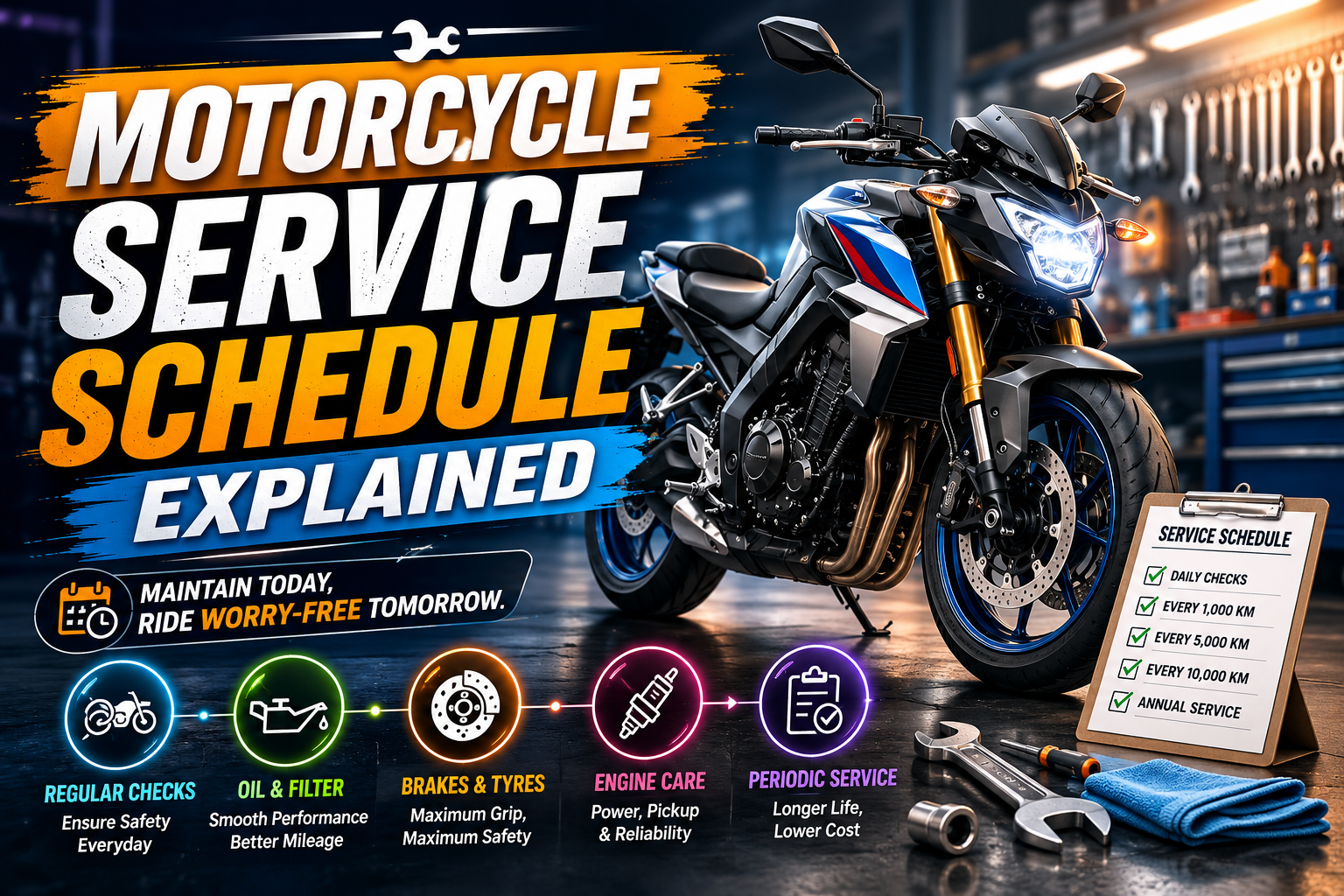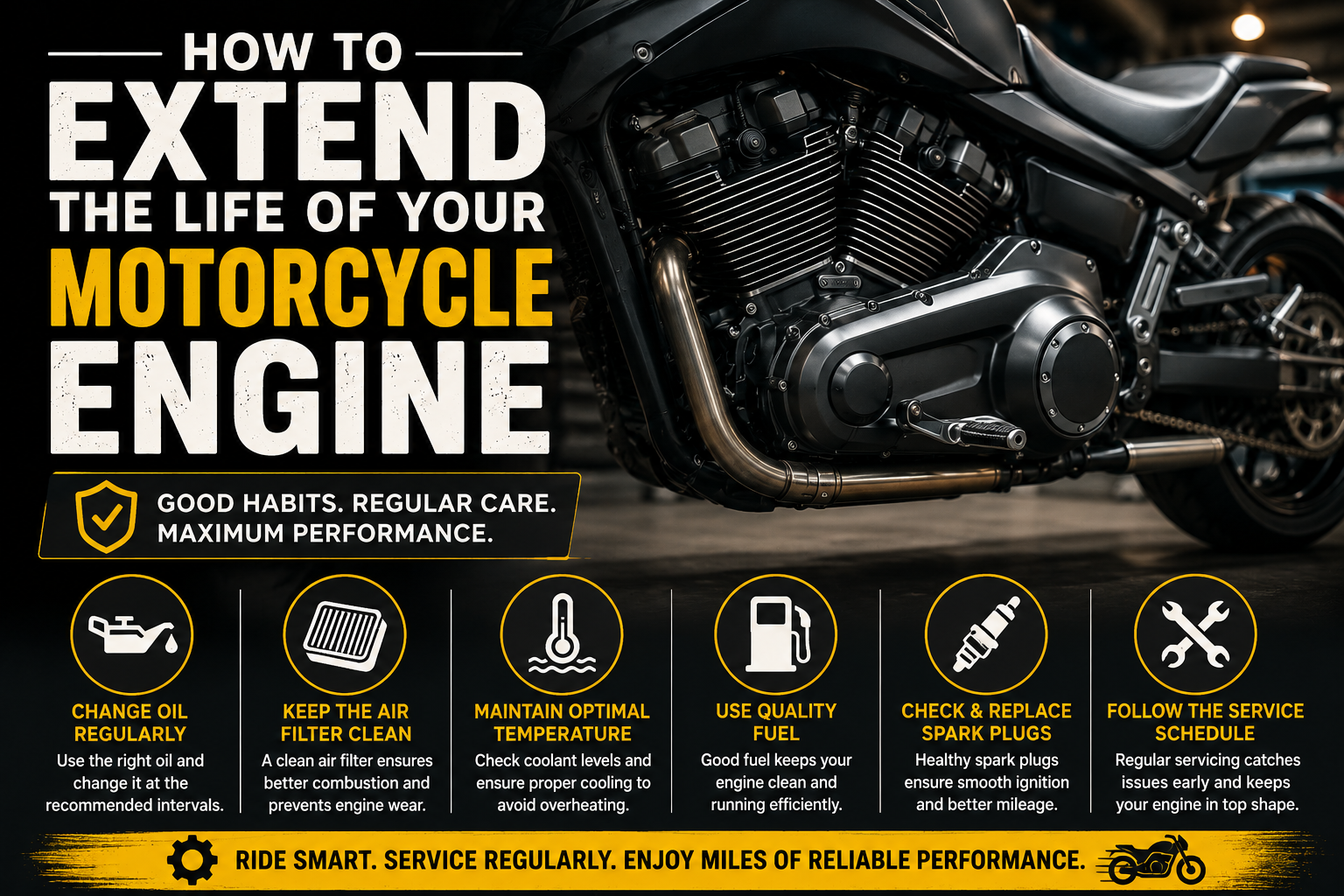
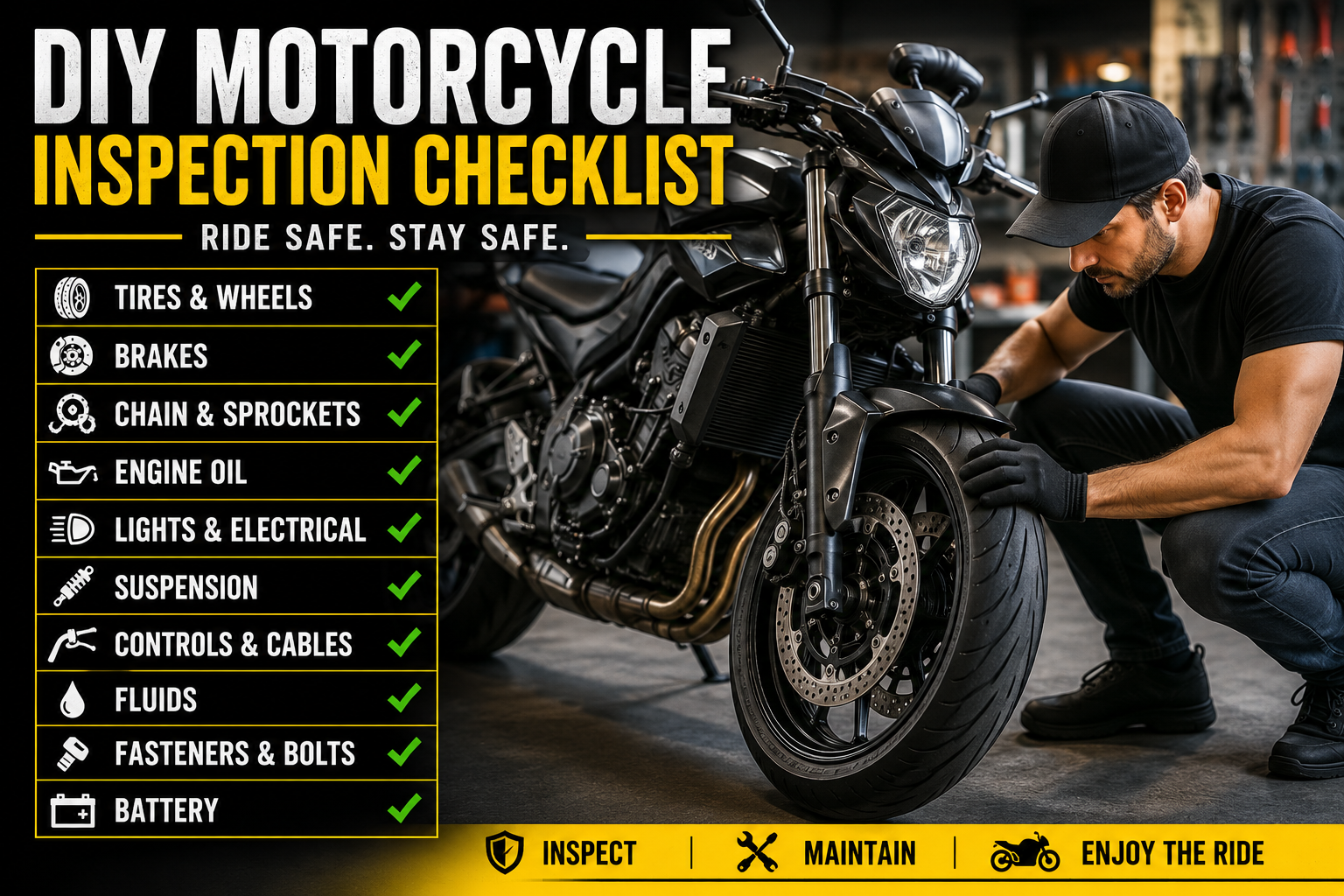
Motorcyclist inspecting tires, brakes, chain, and engine before a ride
I still remember the first time my motorcycle broke down on the side of the road.
The problem wasn’t major. It wasn’t a blown engine or a serious accident. It was a loose battery connection that could have been spotted in less than a minute during a basic inspection.
That experience taught me something every rider eventually learns:
Most motorcycle problems don’t appear out of nowhere.
Many start as small warning signs.
A worn tire. A loose chain. Low oil. Weak brakes. A leaking hose. A dead battery.
The good news is that many of these issues can be found before they become expensive repairs or dangerous safety hazards.
That’s why every rider should have a DIY motorcycle inspection checklist.
Whether you ride daily, commute to work, enjoy weekend trips, or simply keep a motorcycle for occasional rides, a quick inspection can improve safety, reliability, and the lifespan of your bike.
Table of Contents
- Quick Answer: What Is a DIY Motorcycle Inspection?
- Key Motorcycle Inspection Facts
- Why Motorcycle Inspections Matter
- The T-CLOCS Inspection Method
- Tire Inspection Checklist
- Wheel Inspection Checklist
- Brake Inspection Checklist
- Chain and Sprocket Inspection
- Engine Oil Inspection
- Fluid Inspection Checklist
- Battery Inspection Guide
- Lights and Electrical System Check
- Suspension Inspection
- Controls and Cables Check
- Fuel System Inspection
- Fasteners and Bolts Check
- Before Long-Distance Trips
- Common Inspection Mistakes
- Why Regular Inspections Save Money
- FAQs
- Final Thoughts
Quick Answer: What Is a DIY Motorcycle Inspection?
A DIY motorcycle inspection is a routine safety and maintenance check performed by the rider to identify potential problems before riding. It involves checking tires, brakes, lights, fluids, chain, battery, suspension, and other critical components to ensure the motorcycle is safe and reliable.
Key Motorcycle Inspection Facts
| Inspection Area | Why It Matters |
|---|---|
| Tires | Affect grip, braking, and stability |
| Brakes | Essential for rider safety |
| Chain | Transfers engine power to the wheel |
| Oil | Protects engine components |
| Battery | Powers starting and electronics |
| Lights | Improve visibility and legal compliance |
| Suspension | Enhances comfort and control |
| Fluids | Prevent overheating and mechanical damage |
| Controls | Ensure proper operation |
| Fasteners | Prevent loose parts and failures |
1. Why Motorcycle Inspections Matter
Many riders only think about maintenance when something goes wrong.
That approach often leads to:
- Unexpected breakdowns
- Costly repairs
- Reduced fuel efficiency
- Poor handling
- Safety risks
A five-minute inspection before riding can reveal problems before they become serious.
Think of it as preventive maintenance rather than repair.
2. The T-CLOCS Inspection Method
Many motorcycle safety organizations recommend using the T-CLOCS method.
T-CLOCS stands for:
- Tires & Wheels
- Controls
- Lights & Electrical
- Oil & Fluids
- Chassis
- Stands
This simple system helps riders remember the most important inspection points.
3. Tire Inspection Checklist
Your tires are the only part of the motorcycle that touches the road.
Check:
✓ Tire pressure
✓ Tread depth
✓ Sidewall cracks
✓ Punctures
✓ Uneven wear
✓ Embedded objects
Low tire pressure can reduce handling and increase fuel consumption.
A worn tire can dramatically increase stopping distance.
4. Wheel Inspection Checklist
Inspect both wheels carefully.
Look for:
✓ Bent rims
✓ Loose spokes
✓ Damaged bearings
✓ Wheel wobble
✓ Cracks or corrosion
A damaged wheel can affect stability and safety.
5. Brake Inspection Checklist
Brakes are among the most important safety systems on a motorcycle.
Check:
✓ Brake pad thickness
✓ Brake fluid level
✓ Brake lever feel
✓ Brake pedal response
✓ Rotor condition
✓ Brake lines
If brakes feel soft or spongy, they should be inspected immediately.
6. Chain and Sprocket Inspection
A poorly maintained chain can reduce performance and cause premature wear.
Inspect:
✓ Chain tension
✓ Lubrication
✓ Rust
✓ Tight spots
✓ Damaged links
✓ Sprocket teeth wear
A properly maintained chain can last thousands of additional miles.
7. Engine Oil Inspection
Oil is the lifeblood of your engine.
Check:
✓ Oil level
✓ Oil color
✓ Oil leaks
✓ Service interval
Fresh oil helps:
- Reduce wear
- Lower temperatures
- Improve engine life
Dark, dirty oil may indicate it’s time for replacement.
8. Fluid Inspection Checklist
Motorcycles may use several important fluids.
Check:
✓ Coolant level
✓ Brake fluid
✓ Clutch fluid (if applicable)
✓ Fork oil leaks
✓ Fuel condition
Low fluids can cause serious mechanical issues.
9. Battery Inspection Guide
Battery problems are one of the most common causes of motorcycle starting issues.
Inspect:
✓ Terminal connections
✓ Corrosion
✓ Battery voltage
✓ Mounting security
✓ Charging performance
Clean terminals help ensure reliable starting.
10. Lights and Electrical System Check
Visibility is critical for motorcycle safety.
Check:
✓ Headlight
✓ High beam
✓ Brake light
✓ Tail light
✓ Turn signals
✓ Horn
✓ Dashboard indicators
A burned-out light can reduce visibility and result in traffic violations.
11. Suspension Inspection
Suspension affects both comfort and control.
Look for:
✓ Fork leaks
✓ Shock absorber leaks
✓ Excessive bouncing
✓ Unusual noises
✓ Uneven ride height
Proper suspension improves handling and rider confidence.
12. Controls and Cables Check
Controls should operate smoothly.
Inspect:
✓ Throttle response
✓ Clutch lever
✓ Front brake lever
✓ Rear brake pedal
✓ Handlebar movement
✓ Cable condition
Sticky controls can become dangerous during emergency situations.
13. Fuel System Inspection
The fuel system should remain clean and leak-free.
Check:
✓ Fuel tank condition
✓ Fuel lines
✓ Fuel leaks
✓ Fuel cap
✓ Fuel level
Even a small leak can become a major safety hazard.
14. Fasteners and Bolts Check
Motorcycles experience constant vibration.
Inspect:
✓ Mirrors
✓ Foot pegs
✓ Exhaust bolts
✓ Fairings
✓ Handlebars
✓ License plate mounts
Loose bolts can cause unexpected failures.
15. Before Long-Distance Trips
Before any long ride, perform a more detailed inspection.
Checklist:
✓ Tires
✓ Brakes
✓ Chain
✓ Battery
✓ Fluids
✓ Lights
✓ Tool kit
✓ Registration
✓ Insurance
✓ Emergency contact information
A few extra minutes can prevent hours of roadside trouble.
16. Common Inspection Mistakes
Mistake 1: Only Checking Tires
Many riders inspect tires but ignore brakes and fluids.
Mistake 2: Ignoring Small Leaks
Small leaks often become bigger problems.
Mistake 3: Skipping Chain Maintenance
A neglected chain wears out faster and affects performance.
Mistake 4: Forgetting the Battery
Many starting issues originate from poor battery maintenance.
Mistake 5: Assuming Everything Is Fine
Never assume your motorcycle is safe simply because it ran yesterday.
17. Why Regular Inspections Save Money
Routine inspections help:
- Prevent major repairs
- Improve fuel efficiency
- Extend component life
- Reduce breakdowns
- Increase resale value
- Improve rider safety
The cost of a few minutes of inspection is much lower than the cost of a roadside repair.
FAQs
How often should I inspect my motorcycle?
A quick inspection should be performed before every ride.
How long does a motorcycle inspection take?
Most basic inspections take 5–10 minutes.
What should I check before every ride?
Tires, brakes, lights, fluids, and chain condition.
Can I inspect my motorcycle myself?
Yes. Most routine inspections can be performed without professional tools.
Why is tire pressure important?
It affects handling, braking, fuel economy, and tire life.
How often should I lubricate my chain?
Follow your manufacturer’s recommendations, typically every 300–600 miles.
What causes most motorcycle breakdowns?
Battery issues, neglected maintenance, and worn components.
Should I inspect my motorcycle after storage?
Yes. Check tires, battery, fluids, and fuel before riding.
Can inspections improve safety?
Absolutely. Many accidents and breakdowns can be prevented through routine inspections.
Is a motorcycle inspection difficult?
No. Most checks are simple and require only basic knowledge.
Final Thoughts
A motorcycle inspection may seem like a small task, but it can have a huge impact on safety, reliability, and maintenance costs.
The best riders are not just skilled on the road—they are also proactive about caring for their machines.
A few minutes spent checking your motorcycle today can prevent costly repairs tomorrow.
The next time you’re ready to ride, take a moment to inspect your bike.
Your motorcycle—and your wallet—will thank you.