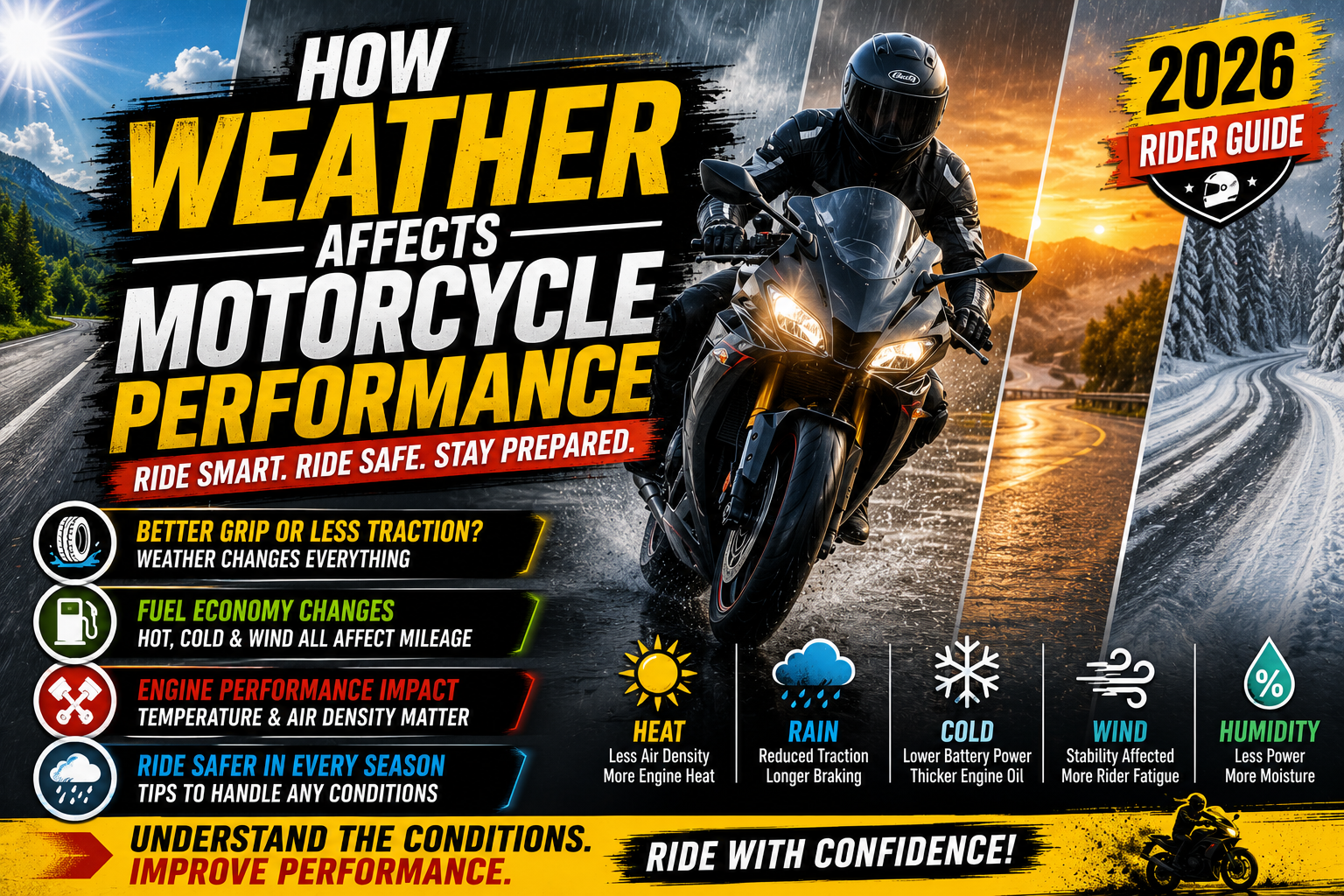
Motorcyclist riding through different weather conditions including sunshine, rain, wind, and cold temperatures.
Most riders think about weather in terms of comfort.
Will it be too hot?
Will it rain?
Do I need a jacket?
But weather affects much more than how comfortable your ride feels.
It directly impacts your motorcycle’s performance.
Everything from tire grip and fuel efficiency to engine power and battery life can change depending on temperature, humidity, wind, and road conditions.
I learned this during a winter morning ride.
My motorcycle felt sluggish.
The tires took longer to warm up.
The throttle response felt different.
Nothing was wrong with the bike.
The weather was simply affecting how it performed.
Understanding these effects can help you ride safer, maintain your motorcycle better, and avoid unexpected problems throughout the year.
Table of Contents
- Quick Answer
- Why Weather Matters
- How Temperature Affects Performance
- Hot Weather Effects
- Cold Weather Effects
- Rain and Wet Roads
- Wind and Motorcycle Stability
- Humidity and Engine Performance
- Altitude and Weather Changes
- Weather and Tire Performance
- Weather and Fuel Economy
- Weather and Battery Life
- Seasonal Maintenance Tips
- Common Rider Mistakes
- FAQs
- Final Thoughts
Quick Answer
Weather affects motorcycle performance by influencing engine efficiency, tire grip, fuel economy, battery performance, rider comfort, and overall handling. Temperature, rain, wind, humidity, and seasonal conditions all play important roles in how a motorcycle performs on the road.
Key Weather Impact Facts
| Weather Condition | Main Effect |
|---|---|
| High Heat | Reduced engine efficiency |
| Cold Temperatures | Lower tire grip |
| Rain | Reduced traction |
| Strong Winds | Stability issues |
| High Humidity | Slight power loss |
| Snow & Ice | Dangerous riding conditions |
| Extreme Cold | Battery performance drops |
| Extreme Heat | Increased engine temperatures |
1. Why Weather Matters for Motorcycles
Unlike cars, motorcycles are fully exposed to the environment.
Weather affects:
✓ Tires
✓ Engine
✓ Brakes
✓ Battery
✓ Rider visibility
✓ Rider comfort
Small weather changes can significantly influence how your motorcycle behaves.
2. How Temperature Affects Engine Performance
Air temperature changes air density.
Cooler air contains more oxygen.
More oxygen often allows the engine to operate more efficiently.
This is one reason motorcycles often feel stronger during cool mornings.
Hot weather produces less dense air, which can slightly reduce engine performance.
3. Hot Weather Effects
Summer riding brings unique challenges.
Common effects include:
Higher Engine Temperatures
Engines must work harder to stay cool.
Increased Tire Pressure
Heat causes air inside tires to expand.
Rider Fatigue
Heat exhaustion can affect concentration.
Increased Fuel Evaporation
Fuel systems work harder in extreme temperatures.
Tips:
✓ Monitor coolant levels
✓ Stay hydrated
✓ Check tire pressures regularly
✓ Avoid excessive idling
4. Cold Weather Effects
Cold weather affects nearly every motorcycle component.
Reduced Battery Performance
Batteries produce less power in cold temperatures.
Slower Engine Warm-Up
Oil becomes thicker when cold.
Reduced Tire Grip
Cold tires provide less traction.
Lower Rider Comfort
Cold temperatures increase fatigue.
Allow motorcycles sufficient warm-up time before riding.
5. Rain and Wet Road Conditions
Rain is one of the most significant weather factors affecting performance.
Risks include:
✓ Reduced traction
✓ Longer braking distances
✓ Reduced visibility
✓ Increased hydroplaning risk
The first few minutes of rain are often the most dangerous because oil and debris rise to the road surface.
6. Wind and Motorcycle Stability
Strong winds can dramatically affect handling.
Crosswinds may:
- Push motorcycles sideways
- Affect lane position
- Increase rider fatigue
Larger motorcycles generally handle wind better than lighter models.
Riders should remain relaxed and avoid sudden steering inputs.
7. Humidity and Engine Performance
Humidity affects air density.
High humidity means more water vapor in the air and slightly less oxygen available for combustion.
Effects may include:
✓ Slight power reduction
✓ Minor fuel efficiency changes
Most modern motorcycles compensate well for humidity changes.
8. Weather and Tire Performance
Tires are extremely sensitive to temperature.
Hot Weather
- Faster warm-up
- Better grip initially
- Increased wear
Cold Weather
- Slower warm-up
- Reduced traction
- Longer stopping distances
Proper tire pressure becomes even more important during weather changes.
9. Weather and Fuel Economy
Fuel economy often changes throughout the year.
Cold Weather
May reduce efficiency due to:
- Longer warm-up times
- Increased engine resistance
Hot Weather
May also affect efficiency through:
- Air density changes
- Increased cooling demands
Smooth riding habits help maintain fuel economy in all conditions.
10. Weather and Motorcycle Batteries
Batteries are especially vulnerable during winter.
Cold weather can:
✓ Reduce starting power
✓ Slow charging performance
✓ Increase battery stress
Battery maintenance becomes more important during colder months.
11. Weather and Brake Performance
Brake systems are affected by:
- Rain
- Mud
- Ice
- Road contaminants
Wet brakes may initially provide less stopping power.
Testing brakes gently after riding through water is a good habit.
12. Seasonal Maintenance Tips
Spring
✓ Inspect tires
✓ Check battery condition
✓ Replace old fluids
Summer
✓ Monitor coolant
✓ Check tire pressure
✓ Inspect chain lubrication
Autumn
✓ Prepare for cooler temperatures
✓ Inspect lighting systems
Winter
✓ Maintain battery charge
✓ Consider fuel stabilizer
✓ Store properly if not riding
13. Common Rider Mistakes
Ignoring Tire Pressure Changes
Weather causes tire pressures to fluctuate.
Underestimating Wind
Strong winds can significantly affect stability.
Neglecting Battery Maintenance
Cold weather accelerates battery issues.
Riding Aggressively in Rain
Wet roads require smoother inputs.
Skipping Seasonal Inspections
Weather-related wear can accumulate over time.
14. How Riders Can Adapt
Experienced riders adjust their habits based on conditions.
Good practices include:
✓ Checking forecasts
✓ Adjusting speed
✓ Wearing proper gear
✓ Maintaining larger following distances
✓ Inspecting motorcycles regularly
Adaptability improves both safety and performance.
Frequently Asked Questions
Does cold weather make motorcycles slower?
Cold weather may affect warm-up times but can sometimes improve engine efficiency once operating normally.
Why do tires feel different in winter?
Rubber compounds become harder at lower temperatures, reducing grip.
Can rain damage a motorcycle?
Occasional rain will not damage a properly maintained motorcycle.
Why is my battery weaker in winter?
Cold temperatures reduce battery efficiency.
Does humidity affect horsepower?
High humidity can slightly reduce engine power.
Is it safe to ride in strong winds?
It can be, but riders should use caution and adjust riding techniques.
Does hot weather affect fuel economy?
Extreme heat may slightly influence fuel efficiency.
Should tire pressure change with seasons?
Always follow manufacturer recommendations and check pressure regularly.
Why do motorcycles overheat in traffic?
Limited airflow reduces cooling efficiency.
What weather condition is most dangerous for riders?
Many riders consider icy roads the most dangerous due to extremely low traction.
Final Thoughts
Weather influences nearly every aspect of motorcycle performance.
From tire grip and engine power to battery health and rider safety, environmental conditions constantly affect how motorcycles behave on the road.
Understanding these effects allows riders to make smarter decisions, perform better maintenance, and adapt to changing conditions.
The weather may be beyond your control.
But how you prepare for it isn’t.
By respecting weather conditions and maintaining your motorcycle properly, you’ll enjoy safer, smoother, and more reliable rides throughout the year.