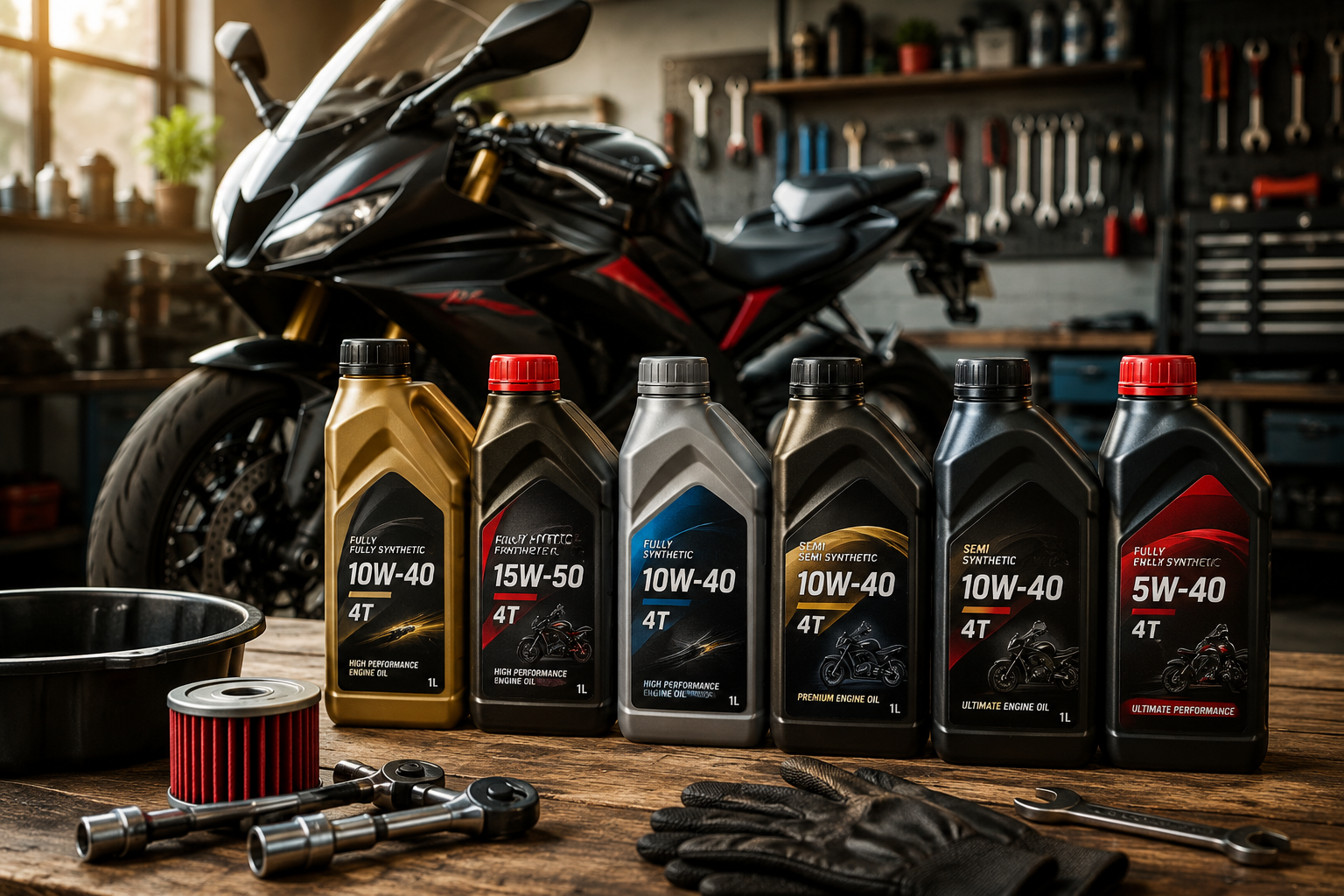
Engine oil is often called the lifeblood of a motorcycle—and for good reason. It lubricates moving parts, reduces friction, dissipates heat, prevents corrosion, and helps keep your engine running efficiently. Choosing the right motorcycle engine oil isn’t just about extending engine life; it also improves shifting, clutch performance, and overall riding experience.
With dozens of brands and oil types available, finding the best option can be confusing. Should you choose synthetic or mineral oil? Is 10W-40 always the right viscosity? Which brands offer the best protection?
This guide compares some of the best motorcycle engine oils available today, explains the differences between oil types, and helps you choose the right one for your motorcycle.
Quick Answer
If you want the best overall motorcycle engine oil, Motul 7100 10W-40 Full Synthetic is an excellent choice for most modern motorcycles thanks to its superior wear protection, smooth shifting, and long service life.
For riders on a budget, Castrol Power1 4T delivers excellent performance without spending premium prices.
Best Motorcycle Engine Oils Compared
| Engine Oil | Type | Best For | Key Advantage |
|---|---|---|---|
| Motul 7100 10W-40 | Full Synthetic | Overall Performance | Excellent engine protection |
| Castrol Power1 4T | Semi/Full Synthetic | Daily Riders | Great value |
| Shell Advance Ultra | Full Synthetic | Long-Distance Touring | Superior cleanliness |
| Liqui Moly Street Race | Full Synthetic | Sport Bikes | High-temperature stability |
| Mobil 1 Racing 4T | Full Synthetic | High Performance | Smooth clutch operation |
1. Motul 7100 10W-40 Full Synthetic
Best Overall Motorcycle Engine Oil
Motul has built an excellent reputation among motorcycle enthusiasts, mechanics, and professional racers. The Motul 7100 Full Synthetic is one of the most recommended oils for street motorcycles because it offers outstanding lubrication under both normal commuting and aggressive riding conditions.
Its ester-based synthetic formula provides exceptional protection against engine wear while maintaining smooth gear changes and reliable wet clutch performance.
Pros
- Excellent high-temperature protection
- Smooth gear shifting
- Reduces engine wear
- Long oil life
- Suitable for most modern motorcycles
Cons
- Slightly more expensive than conventional oils
2. Castrol Power1 4T
Best Value for Money
Castrol Power1 has been a favorite among everyday riders for years. It offers dependable protection at a reasonable price, making it ideal for commuters and weekend riders.
Its formulation helps reduce internal engine friction while improving throttle response.
Best For
- Daily commuting
- Small and mid-sized motorcycles
- Riders looking for affordable quality
3. Shell Advance Ultra
Best for Touring Motorcycles
Long-distance touring places continuous stress on motorcycle engines. Shell Advance Ultra is designed to maintain consistent lubrication even during extended highway rides and hot weather conditions.
Its PurePlus Technology helps keep the engine cleaner by reducing sludge and deposits.
Highlights
- Excellent thermal stability
- Cleaner engine internals
- Longer oil life
- Outstanding oxidation resistance
4. Liqui Moly Street Race
Best Premium Choice
Liqui Moly produces some of the highest-quality lubricants available. Street Race Full Synthetic is engineered for high-performance motorcycles that frequently operate at higher RPMs.
It provides excellent protection during spirited riding while maintaining consistent viscosity.
Ideal for:
- Sport bikes
- Naked motorcycles
- Performance-oriented riders
5. Mobil 1 Racing 4T
Best for High-Performance Engines
Mobil 1 Racing 4T is specifically formulated for powerful motorcycles that generate significant engine heat.
Its synthetic formulation protects internal components while ensuring reliable clutch engagement and smooth transmission performance.
It performs exceptionally well in:
- High-speed highway riding
- Sport riding
- Warm climates
Understanding Motorcycle Oil Types
Mineral Oil
Mineral oil is refined directly from crude oil and is generally the most affordable option.
Advantages
- Lower cost
- Suitable for older motorcycles
- Good for low-mileage riders
Disadvantages
- Shorter service intervals
- Less resistant to extreme temperatures
- Breaks down faster
Semi-Synthetic Oil
Semi-synthetic oil blends mineral and synthetic base oils.
It offers improved protection compared to mineral oil while remaining more affordable than full synthetic options.
Best suited for:
- Daily commuting
- Moderate riding
- Mid-range motorcycles
Full Synthetic Oil
Full synthetic oil provides the highest level of protection and performance.
Benefits include:
- Better lubrication
- Longer oil life
- Improved fuel efficiency
- Superior heat resistance
- Better cold starts
- Reduced engine wear
Although more expensive, full synthetic oil often proves more economical over time due to its longer replacement intervals.
Choosing the Right Oil Viscosity
Motorcycle manufacturers specify oil viscosity for a reason.
Common grades include:
- 10W-40 – Most modern motorcycles
- 10W-30 – Cooler climates and smaller engines
- 15W-50 – Hot weather riding
- 20W-50 – Older motorcycles and air-cooled engines
Always consult your owner’s manual before changing viscosity.
How Often Should You Change Motorcycle Oil?
Oil change intervals depend on:
- Riding style
- Engine size
- Oil quality
- Climate
- Manufacturer recommendations
General guidelines:
- Mineral Oil: 2,000–3,000 miles
- Semi-Synthetic: 3,500–5,000 miles
- Full Synthetic: 5,000–8,000 miles
Frequent stop-and-go traffic, dusty environments, and aggressive riding may require more frequent oil changes.
Signs Your Motorcycle Needs an Oil Change
Watch for these common warning signs:
- Dark or dirty oil
- Hard gear shifts
- Increased engine noise
- Rough clutch operation
- Burning oil smell
- Engine overheating
- Oil warning light
Ignoring these symptoms can lead to accelerated engine wear and expensive repairs.
Tips for Maximizing Engine Life
Changing oil regularly is only part of proper motorcycle maintenance.
You should also:
- Replace the oil filter with every oil change.
- Check oil levels before long rides.
- Use the manufacturer-recommended viscosity.
- Avoid mixing different oil types unless necessary.
- Warm the engine before riding aggressively.
- Inspect for oil leaks regularly.
Small maintenance habits can significantly extend the lifespan of your motorcycle engine.
Frequently Asked Questions
Is synthetic oil better for motorcycles?
Yes. Full synthetic oil generally provides better protection against wear, higher temperature stability, and longer service intervals than conventional mineral oil.
Can I switch from mineral to synthetic oil?
In most modern motorcycles, yes. However, always follow the manufacturer’s recommendations and ensure the oil meets the required specifications.
Can I use car engine oil in a motorcycle?
Most motorcycles with wet clutches require motorcycle-specific oil. Automotive oils may contain friction modifiers that can cause clutch slippage.
Which viscosity is best?
The correct viscosity depends on your motorcycle model and the climate in which you ride. Always refer to your owner’s manual.
Should I always replace the oil filter?
Yes. Replacing the filter during every oil change helps remove contaminants and ensures clean oil circulates through the engine.
Final Verdict
Selecting the right motorcycle engine oil is one of the simplest and most effective ways to improve engine performance and extend the life of your bike. While premium synthetic oils cost more upfront, they often provide better protection, smoother shifting, and longer service intervals, making them a worthwhile investment for many riders.
For most modern motorcycles, Motul 7100 Full Synthetic stands out as the best overall choice thanks to its excellent engine protection, durability, and consistent performance. Riders looking for a more budget-friendly option will find Castrol Power1 4T to be an excellent balance of quality and affordability.
No matter which brand you choose, using the correct oil grade, replacing it at the recommended intervals, and pairing it with a quality oil filter will help keep your motorcycle running smoothly for years to come.
Ride Smart. Maintain Better. Enjoy Every Mile.